

Contents
Chemical Peels/Skin Rejuvenation Treatments
Most people, men and women always have the urge to have a beautiful, smooth, clear and glowing skin. Unfortunately, there are some skin issues that may hinder an individual from achieving such, and these include;
- Age spots
- Acne scars
- Crow’s feet
- Aging skin
- Melasma
- Hyperpigmentation
- Sun damaged skin
- Scarring
- Wrinkles
- Sagging skin
Chemical peels help in relieving the above skin issues thus regenerating the skin and leaving it smoother and less wrinkled than it was before.
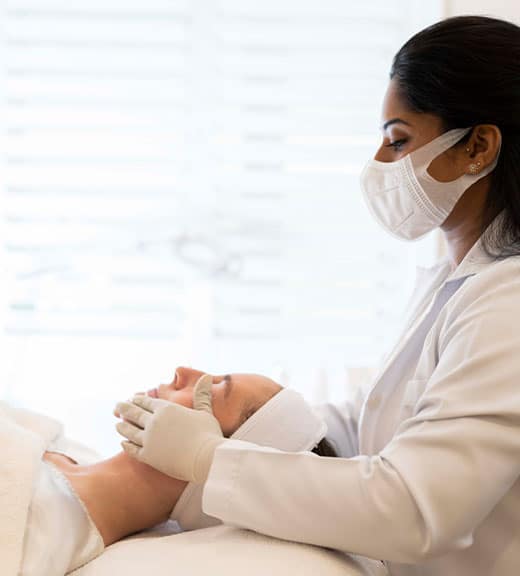
A chemical peel is a skin treatment procedure which is used to improve the appearance of the skin on the hands, neck and face. A chemical solution is typically applied to the targeted area causing the skin to exfoliate and peel off leaving behind a new, healthy and smoother skin.
Chemical Peels/Skin Rejuvenation Treatment Options
There are 3 types of Chemical peels and they are;
- Superficial or lunchtime peel: This type of chemical peel uses Alpha-hydroxy acid or another mild acid to penetrate and gently exfoliate the outer layer of skin. The treatment improves the appearance of rough skin, mild skin discoloration and refreshes the face, neck, chest and hands as well.
- Medium peel: This type of chemical peel uses trichloroacetic or glycolic acid to penetrate both the out and middle layers of the skin so as to remove damaged skin cells. The treatment improves fine lines and wrinkles, age spots, freckles and moderate skin discoloration. It is also used to smooth rough skin and treat some precancerous skin growths such as actinic keratosis.
- Deep peel: This type of chemical peel uses phenol or trichloroacetic acid to deeply penetrate the middle layer of the skin so as to remove damaged skin cells. The treatment gets rid of moderate lines, freckles, melasma, age spots and shallow scars. This procedure is only used for the face and can be performed only once.

Our Commitment To You
It is perfectly normal to feel uncomfortable with the idea of any skin treatment. Don’t worry, we will guide you smoothly and comfortably along the entire process to allow you to make the best decision. At Al Shunnar Plastic Surgery, our experts have more than 20 years of experience in plastic and cosmetic procedures and skin treatments and have helped more than 10,000 patients safely achieve their dream of beauty and confidence. We will identify the most suitable expert for you, will listen to you, understand and identify your individual and detailed requirements in a tailor-made consultation, advise you on what you expect from the right treatment and ultimately develop the most suitable treatment plan with you.
The Chemical Peels/Skin Rejuvenation Treatment Process
a) The Consultation
The first step of a chemical peel is having a detailed consultation and examination in the clinic with our board-certified skin specialists, to determine a tailor-made plan for each candidate.
b) The Treatment
The second step is to schedule the chemical peel treatment with the highly qualified and experienced Dermatologist who is an expert in chemical peels and other anti-aging procedures. The treatment, which is done in the clinic treatment room, requires 30 – 45 minutes.
Prior to any skin treatment or surgical procedure at the clinic, each patient is screened to ensure that it is safe to proceed with the procedure. This includes a pre-anesthetic consultation and blood testing (when needed), and to ensure the patient is a fit candidate for the treatment.
During a chemical peel treatment, in superficial peels, anesthesia is rarely required but cool compresses are offered afterward so as to relieve the stinging sensation. As for deeper peels, local anesthesia or systematic sedation is used.
The process begins with the application of a de-oiling solvent over the treatment area. The appropriate chemical peel is then applied for the appropriate time period required for that particular peel, and then it is halted by the application of a neutralizing solution before cleansing it off.
For deeper peels, the Dermatologist accompanies the patient throughout the entire process of recovery and healing, through scheduled follow-ups.
c) The Recovery
A reaction similar to a sunburn occurs following the chemical procedure, which also depends on the chemical peel. The peeling normally involves redness which is followed by scaling that lasts between three to seven days. Mild peels can be repeated at one to four weeks intervals to get the desired results.
Medium and deep peels result in swelling and blisters and may crust, break, turn brown and peel off over a period of 7 to 14 days. Medium peels may be repeated after 6 to 12 months if necessary.
Sun avoidance is a must after a chemical peel because the skin usually fragile. A high spectrum sunscreen is recommended to avoid severe sunburn.
In most cases, a home-care kit is prescribed, which the patient uses for faster healing, and also to achieve the best results.
Before And After Results
At Al Shunnar Plastic Surgery Dubai, we do our best to protect our patients’ confidentiality. That is why all the Before & After results are not available online, however, they will be shown during a consultation in The Clinic only.
Meet Our Team
Our Board-Certified expert surgeons have over 20 years’ surgical experience and are trained at some of the world’s best medical schools with a proven track record in UAE, the USA and Brazil.

Consultant Plastic Surgeon
Dr. Buthainah Al Shunnar is an Emirati American Board Certified Plastic Surgeon with extensive experience in breast surgery, body contouring, aesthetic facial surgery, hand surgery, post-cancer reconstruction and microsurgery, as well as non-invasive cosmetic procedures such as Botox, Dermal Fillers and PRP.
Dr. Buthainah Al-Shunnar
Consultant Plastic Surgeon
Consultant Plastic Surgeon
Dr Kamal is an American Board Certified Plastic Surgeon with extensive experience in aesthetic facial surgery, breast surgery, reconstructive surgery, body contouring, fat transfer and non-invasive cosmetic procedures such as Botox, Dermal Fillers and PRP.
Dr. Kamal Sawan
Consultant Plastic Surgeon
Specialist Plastic Surgeon
Dr. Claudia Machado is a Brazilian Board Certified Plastic Surgeon with extensive experience in aesthetic facial surgery, breast surgery, body contouring, fat transfer and minimal and non-invasive cosmetic procedures such as Botox, Dermal Fillers, PRP, Chemical peels, CO2 therapy and others.
Dr. Claudia Alves Silva Machado
Specialist Plastic Surgeon
Precautions
Although a Chemical peel treatment is straightforward, it is important that the right level of intervention or treatment is determined and that the procedure be performed by a qualified and expert Dermatologist. A potential candidate has to fit into certain criteria to be eligible for the procedure and should have:
- Realistic expectations regarding the expected results.
- Be in good health both physically and psychologically.
- Sun damaged skin
- Uneven skin pigmentation
- Acne scarring
What to expect from Chemical Peels/Skin Rejuvenation Treatments
The main benefit of a Chemical peel is smooth younger looking and clear skin. Since everyone is different, the expected results of a Chemical peel might vary from person to person, but benefits typically include:
- Smoother skin
- Improved appearance of mild scars
- Reduced appearance of fine lines and wrinkles
- Youthful skin
- Reduced appearance of age spots, freckles and dark patches (melasma)
Frequently Asked Questions
How does a chemical peel work?
A chemical peel involves the use of a chemical solution to improve the tone and appearance of your skin. During the treatment, a chemical solution is applied to the skin causing injury or trauma to the skin layers. The dead skin layers peel off revealing more healthy, youthful, and radiant skin.
Are there procedures or products that I should avoid before my skin resurfacing treatment?
A week before the chemical peel treatment avoid laser hair removal, waxing, deploritory creams, and electrolysis. About 2-3 days before the treatment discontinue using prescription topicals such as Retin-A and products containing retinol, benzoyl peroxide, alpha hydroxyl acids (AHA), or beta hydroxyl acids.
If you’ve recently had cosmetic fillers, laser treatments, medical cosmetic facial treatments, or other surgical treatments, you should wait until you are fully healed and your skin sensitivity has resolved before undergoing a chemical peel.
How many chemical peel treatments will I need?
A light chemical peel treats acne, fine wrinkles, dryness, and uneven skin tone. This type of peel is superficial and can be done every two to five weeks.
A medium chemical peel is used to treat uneven skin tone, wrinkles, and acne scars. The treatment can be repeated after a certain amount of time to achieve or maintain the desired results.
A deep chemical peel is used to treat scars, deeper wrinkles, and precancerous growths. It can only be done once.
Why didn’t I see my skin peel after the skin resurfacing treatment?
The amount of skin peeling usually varies depending on the depth of the peel and the skin condition of the individual at the time of the peel. Even if there is no visible peeling, the skin is still sloughing off at an accelerated rate, resulting in the improvement of the skin texture and tone as well as improvement in the appearance of fine lines and uneven pigmentation.
When can I resume exercising after the skin resurfacing treatment?
How soon you can resume exercising after a chemical peel depends on the type of chemical peel you have undergone.
For a light chemical peel, normal routine and exercising can be resumed immediately after the peel.
For a medium peel, you should avoid sweating until your skin has healed which is anywhere between five to seven days.
For a deep chemical peel, the recovery period is usually longer than the other types of peels. Your practitioner will guide you on how and when you can resume exercising depending on how well you are healing.
How long do the results of a chemical peel last?
The results of a light peel last about one to two months. A medium peel results will last for two to six months and the results of a deep peel are long-lasting.
Why should I avoid the sun after getting skin resurfacing treatment?
The new skin achieved after a chemical peel is usually tender, sensitive and susceptible to sunburn, thereby extra precautions should be taken to avoid the sun after the treatment. It is recommended to use sunscreen and to limit sun exposure for a couple of weeks after the chemical peel treatment.
Patient Reviews
I had a wonderful experience at Al Shunnar Plastic Surgery Clinic. The team was extremely professional, welcoming, and attentive throughout the entire process. The skin care therapist, Soumia took the time to explain everything clearly and made me feel very comfortable and confident. The clinic itself is beautiful, clean, and very well organized. Truly impressed with the level of care and service provided. Highly recommended!
 (Verified Patient) View More Reviews >
Next Steps
Book your appointment for a Consultation
Would you like to understand what the best options for a younger, fresher, better-looking-you are? Meet one of our experts at Al Shunnar Plastic Surgery for a personal consultation, to develop a tailor-made plan for you. Contact us or book an appointment and our patient care coordinators will identify the most suitable expert for you.
